
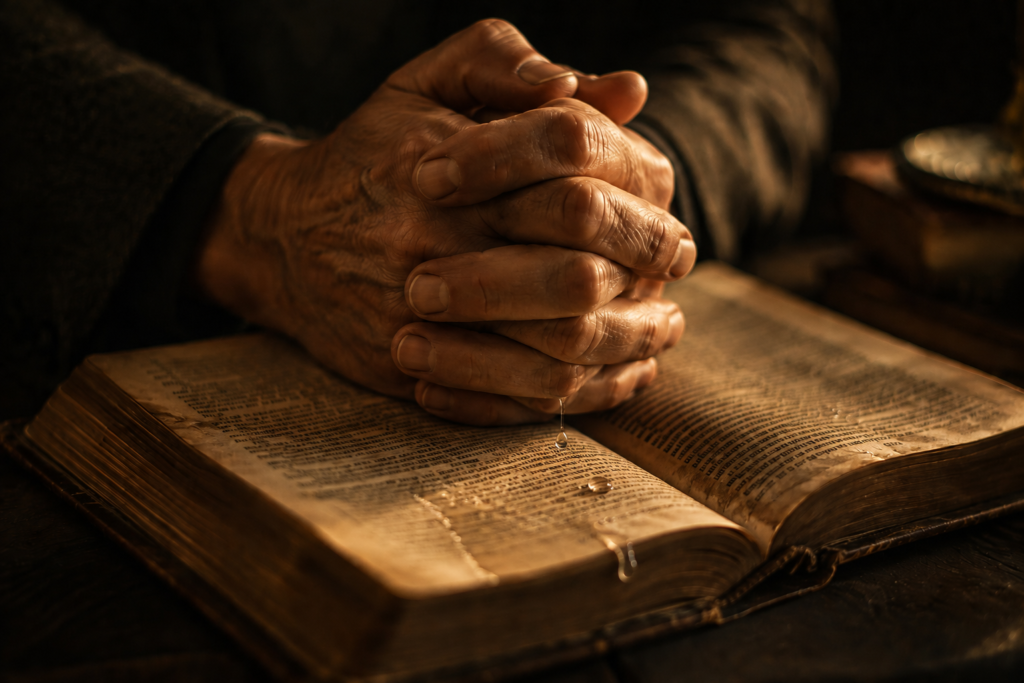
“Talking with Intent”
Today, people have a particular interest in knowing more about God, the Bible and Christianity. Different individuals, believers or not, are taking the ‘God claim’ into the main scene and displaying different views and approaches to what God may be. All these discussions are motivated by the truth and a peculiar interest in what faithful witnesses have well defended and exposed from the Bible: what Christianity is not and who God is. Against the rebuttals, accusations, questions and contradictions, there was answering going beyond the argument. Witnessing to the very person standing against God and Christianity.
However, they do not all have the purpose of promoting God and Christianity as the truth. It seems that the talks are around in further exploring if it is true. Nonetheless, I had to learn and embody what Paul was saying with a joyous and peaceful heart to the church in Philippi1. Being imprisoned for preaching the Gospel, therefore, standing against the culture and society norms of the day. Apostle Paul was rather bringing a new ‘God claim’ into the dominant Greek society. Which, for some, was appealing; for others raised some interest, and another response was fierce opposition. In whatever context we may find ourselves, just like Apostle Paul, we ought to acknowledge what is happening: Christ is preached.2
Throughout the book of Acts, the reader can trace the harsh and stringent opposition posed, even by fellow countrymen. Apostle Paul, however, was not discouraged or stopped by oppression, as he understood that the preaching of Jesus of Nazareth as the ‘Messiah’, produced into a culture delved into the Law of Moses and blind to what it prophesied. The truth was right in front of their eyes, proclaimed over and over again, starting with Moses, going through the prophets, and Jesus fulfilled and proved without doubt that he was the promised one3 from the Father. Preaching this good news4 to any person from any culture and upbringing was shaking the very foundations.
Today’s times are not much different from the first-century world. Humanity is still facing the same issue as it did back then and even further back in history: sin and its consequences.
In such a cultural context, the apostle Paul was at a moment in his ministry, hearing and observing why and how the gospel was taken into public space and conversations; he saw beyond the human factor5. Although there were many reasons to be sad, discouraged and disappointed that Christ was preached for the wrong reasons. Ultimately, Christ was preached6, and it was in the public space as a headline. We see that today, and I had to learn from Paul, by taking a step back and understanding that the mere fact that Christianity is discussed and the ‘God claim’, either by believers or non-believers, the message is out there. And that now creates the context for more and more sound Christians to go out into the world and witness for the Truth, with a Christ-centred approach, speaking the truth in love7. Not being just on the defence, but also asking honest questions and inquiring why something is believed to be true. This will help people see if they are either against the truth and suppress it, or just did not know any better.
“End with Prayer”
In all the socio-economic-political tumult, we need the wisdom to understand the world as it is and act with wisdom according to God’s will. Because God is not distant from what humanity is going through. Either in the macro or on an individual level, God is not distant. He is rather kept at a distance. This does not help the individual and humanity’s cause. Therefore, end with prayer. Letting your heart and mind overflow in the intimacy of prayer with God is vital. We ought to return to the basics and see the world as it is.
The young King Solomon was faced with the task of continuing to rule over the people of Israel. He was scared and felt small. He understood that what was set before him, and what the people of Israel expected of him, was too great to accomplish on his own. His father, King David, raised the bar of kingship to a high standard. Now King Solomon was to at least raise himself to that standard. There was only one way to move forward. And we often hear and think that before making an important decision, before doing something, to pray for it is a good start. However, I think we ought to end with prayer and begin with God.
More often our prayers are asking God to show us what we ought to do and may already imply to God what we may desire to be the outcome of it. But with God is not so. In prayer, we ought to end with what we want, and allow God to show us what he wants. Notice King Solomon: when he prayed for a wise heart, he got more than what he asked. I often say to myself that Solomon had the wisdom to ask for wisdom.
I would like for you to observe when Solomon went up to Gibeon seeking God and to sacrifice there. The striking detail given in the narrative is the motivation. Gibeon was the great high place8. After God appeared to Solomon in the dream and blessed Solomon in response to his pleading for wisdom, Solomon woke up and travelled back to Jerusalem and stood before the ark of the covenant of the LORD9. Solomon ended with prayer and began with God in his presence.
This event is rather an example to show you how God used the right person at the right time for the right situation. None of us is any different today; we just don’t see it yet. Or will never see it, because all we seek to achieve is our will to be confirmed by God and not aligned with God.
“Pray with Ceasing”
There are times when we keep praying for wisdom, yet shy to act in the wisdom already given. God’s desire for his children is to be independently dependent on God. Ultimately, God gives wisdom and then blesses the choices made within the given wisdom.
In James chapter 110, the promise of being granted wisdom when asked without doubt is depicted as a direct statement of promise without making use of the word ‘promise’. Notice that the condition of asking without wavering comes after praying for wisdom, and before that is mentioned if any lack wisdom; in other words, the need for sage. And I think this is where we ought to stop and discern (diakrinō). That most people do not realise is that the moment one asks, the promise is that he will be given. Therefore, in order to end with prayer, they continue in prayer to ask for wisdom. Perseverance in prayer and failing to act in wisdom is evidence that either one prayed with doubt. Or they were granted wisdom but are blinded to understand that God has blessed them with the ability to discern.
James in chapter 1 verse 5 is not saying to persist in prayer to receive wisdom, but to ask with no doubt, and it shall be given. The young King Solomon is a living example. I do not remember reading about Solomon ever again asking for wisdom. You see, persistence in prayer is for different situations, where persistence in prayer is the means by which something is granted. Whereas, when it comes to praying for wisdom, without doubt, it is the means by which wisdom is granted.
Notice what happened after Solomon prayed for wisdom and God responded to his prayer. Solomon was now in Jerusalem, before the ark of the covenant of the Lord. But truthfully, that’s where we all start: at Gibeon11. And it’s God’s grace that brings any of us, like Solomon, into Jerusalem, into the presence of the Lord, to start from there. And after Solomon worshipped and sacrificed to God in Jerusalem, his wisdom was now on trial. Judging in the situation of the two women, who were living together and had a son each. One of the boys was found dead one day, and the two mothers came to Solomon to judge their case. The first mother was claiming that the living son was hers and the dead one belonged to the other. The second mother was denying this, claiming that the dead son belonged to the first mother and the living one was hers.12 Notice that this was no easy situation as a judge to be in. Both parties were the accused and the defender at the same time. The wise King Solomon attempted the despicable by commanding that each mother be given half of the living son. The focus of the judgment is here, and Solomon, in the given wisdom, acted in this situation by exposing the veritable motherhood love. The true mother asked for the child not to be killed but to be given to the other. While the false claimant mother asked for the child to be divided. What is more, Solomon exposed both parties’ positions in the accusation and on the defence. Therefore, each of the mothers showed what their hearts truly were intending for.
“Heading to..
Many believers today are stuck in Gibeon and have never taken the leap of faith to travel to Jerusalem. Or even worse, they believe that praying without ceasing is acting in wisdom. However, wisdom is materialised and proven in the very actions for which it was asked to be given for.
If one prays to wisely find and choose a life partner, spending most of your time on your knees, you won’t find nor chose anything. If one prays for wisdom in the workplace, hiding behind excuses and only clocking in and out, it will not result in workplace benefits. If one prays for wisdom in the ministry, however, church attendance is the highest achievement so far; what more wisdom is needed to know when to leave the home to be on time for the church service?
Wisdom goes beyond knowledge. Wisdom is preceded by faith without wavering. Acting in wisdom is by faith without wavering, and growing in wisdom is by faith without wavering. That’s the wise step we all must take, to trust without doubt. Take a step back and have a true moment of honesty towards yourself. Are you trusting without doubt, or doubting without faith?
Solomon remains an example of lived experience of trusting without wavering and precisely asking for wisdom to judge and discern between good and bad.13 And when faced with such a situation to judge and discern between the good and bad, that’s exactly what Solomon did: acted in the given wisdom.
..Discernment”
Present and constant prayer does not mean the existence of a personal relationship with God through Jesus. One may never cease asking, and yet never draw near. The stalling in Gibeon is not always a failure to act — at times it is seeing Jerusalem from far away and failure to know the One being asked.
I am often reminded, by God through the Holy Ghost, about something I learned during a life event. If I have trusted God for Salvation, if I have put my eternal destiny in God through faith, then why is it a bigger challenge to trust God for the provision of earthly things, including the blessing of having wisdom and discernment?
I think what is missing for many Christians is a personal relationship with God. Many cannot identify the last time God spoke personally to them on a personal matter. Others cannot remember when that happened, and only a few are actively speaking to God and hearing God’s voice. Understanding, therefore, God’s ways and recognising the path they are walking is unmerited, resting entirely on grace. Many of us know the Bible very well and know little about God’s Word, which speaks today. The recipe towards a wise and blessed life, led by godly discernment towards a heavenly scope, is found in God’s Word. And I would like to point out for you what the wise Solomon wrote in Proverbs chapter 3, verses 4 to 6. The mâshâl (paroimia) found in these verses presses heavily on trusting in the Lord with all the heart and leaning not on my own understanding. I think in most situations we begin with our own understanding, and with little trust in God and not with all the heart to trust in him. Our ways have at times no purpose or direction, because we have not yet acknowledged God in all of them, but just in some.
The wrong position we take at times is that, if I see that I can have control over one thing and not over another, we give God the one over which our control is lacking. But in reality, we have little to no control over anything. We breathe most of the time without knowing we do. Our hearts beat without knowing. And in reality, we have no control or awareness that they happen and sustain life in the tent of flesh.
Just like Solomon, it would be wise to acknowledge that what we need comes from God and is sustained by God. The wise step we ought to take, just like Solomon, is to be wise in trusting the Lord and, without wavering, ask for wisdom.
- City of Philippi – Wikipedia ↩︎
- Philippians 1:18 ↩︎
- John 5:39 ↩︎
- Romans 1:16 ↩︎
- Philippians 1:15-17 ↩︎
- Philippians 1:18 ↩︎
- Ephesians 4:15 ↩︎
- 1 Kings 3:4 ↩︎
- 1 Kings 3:15 ↩︎
- James 1:5-6 ↩︎
- Wade Burleson makes a related observation about Gibeon and Jerusalem in “Avoid Gibeon,” Wade Burleson at Istoria (Substack), March 23, 2026
Wade Burleson, “David’s Tabernacle & the New Covenant,” Istoria Ministries
Two Tents,” One Voice Worship
↩︎ - 1 Kings 3:23 ↩︎
- 1 Kings 3:9 ↩︎
Discover more from AvA blog
Subscribe to get the latest posts sent to your email.
