
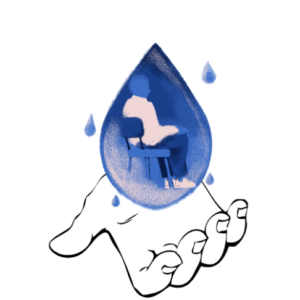
When Wisdom Grows Heavy
Carl Jung, a Swiss psychiatrist born in the late 19th century, explored how increased consciousness can separate a person from the collective, making loneliness a frequent—though not inevitable—cost of deeper insight. Meaning, as knowledge grows, a subtle separation often follows—not because understanding is antisocial, but because deeper insight exposes complexity, contradiction, and limits that simpler views can ignore.
Ecclesiastes names the inner cost of this clarity with striking honesty:
“For in much wisdom is much grief: and he that increaseth knowledge increaseth sorrow.” (Ecclesiastes 1:18, KJV).
To see more is to feel more—to become newly aware of injustice, futility, and the fragility of human striving. When this burden of insight is carried without humility or shared meaning, sorrow can harden into distance and understanding into isolation. Knowledge itself is not the problem; the pain it brings is the weight of seeing reality as it is, and if that weight is borne alone, the knower may find himself increasingly set apart from those still sheltered by simpler certainties.
The proverbs of Solomon depict the wise man as a skilful man who knows how to draw knowledge and understanding:
“Counsel in the heart of man is like deep water; but a man of understanding will draw it out.” (Proverbs 20:5, KJV)
A man of understanding, skilful and wise in thinking, drawing the right counsel for the right time, applying it for the long run, will inevitably be separated by his understanding of God. Not arrogantly, but with the humble purpose to be kept set apart and sanctified in the presence of the Lord. The Bible encourages all people to be skilful in thinking and to know God to the limits of His revelation, by providing the context and the necessary help.
Yet this creates a paradox I have observed among Christians—and one I myself experienced at a certain point—where I found myself detached from many ideas. Not because they lacked value. On the contrary, their weight was no longer pressing.
The deeper we dive into the ocean, the greater the pressure becomes with every inch of descent, until the human body can no longer withstand it and collapses inward. What is true of the sea is also true of knowledge: depth brings weight. To see more is to carry more—to bear pressures that those who remain near the surface never feel. Wisdom and knowledge are not weightless.
However, they can have the opposite effect: rather than pressing in from the outside, it presses outward from within the heart. That is why King David was instructing his son Solomon to “Keep thy heart with all diligence; for out of it are the issues of life.” (Proverbs 4:23, KJV) Though the Bible is a humble wealth of understanding about God, many fellow brothers and sisters remain content with proudly only scraping the surface.
The heart is that well which God works, transforming and renewing it into an overflowing life-giving spring. However, sin has corrupted it to the extent that “The heart is deceitful above all things, and desperately wicked:” (Jeremiah 17:9, KJV). The heart is also the altar, which, once washed by the blood of the Lamb, becomes the holy place of worship and praise.
Looking Into the Heart
“Now he was ruddy and had beautiful eyes and was handsome.” (1 Samuel 16:12, KJV)
When Jesse presented his sons before the prophet Samuel, he was initially tempted to believe that Eliab—judging by his appearance—was chosen by God to be the next king of Israel. Yet the old prophet was taught, in that very moment, not to let his judgment be darkened by outward appearance, but to learn to look beyond the countenance.
Jesse presented all seven of his sons, and the scene concludes with Samuel asking, “Are these all thy children?” I still wrestle with this moment. It is as if David—the youngest, the ruddy one, keeping the sheep—was either not considered worthy to be presented before the prophet or scarcely counted as a son. Yet God was not swayed by David’s position within the family, nor by Samuel’s blurred judgment. The Lord was looking where human eyes cannot see—upon the heart.
I wonder where that young and fiery heart, full of trust and zeal for the Lord, was forged. Was it within the bosom of Jesse’s family, or in the wilderness, tending sheep, in solitude with the living God—the LORD of hosts, who saves not by sword nor spear? (1 Samuel 17:45–47)
If the reader of David’s story is not at least impressed by his assurance of who God is, then perhaps the reader’s judgment, like Samuel’s, remains blurred. Assurance in a person’s life comes from profound knowledge of God. And profound knowledge of God is learned and experienced alone with God, who works patiently and deeply within the heart.
David proved—after a life devoted to God, marked by both grievous sin and deep repentance—to be a man after God’s own heart.
In the Darkest Depths
“I went down to the bottoms of the mountains; the earth with her bars was about me for ever.” Jonah 2:5, KJV
The prophet Jonah was tasked by God to minister to the people of Nineveh. This nation was not a friendly one, but a people of pure-bred warriors and cruelty. Their society was grounded in war, and from the young to the old, the spilling of blood was nearly trivial. They had a feared reputation for exceptional brutality—war was theology to them, documented in practices such as impalement, flaying enemies alive, displaying skins on city walls, decapitation, mutilation, forced deportations, and the destruction of entire cities. They boasted of these acts in their own records.
From Israel’s perspective, Nineveh was not merely an enemy, but an instrument of dread. This explains Jonah’s revulsion at the idea of divine mercy being extended to them.
Refusing to preach to Nineveh, Jonah ends up in a state worse than anything the Assyrians could have imposed. When the ship began to shake and be violently tossed by the waves, Jonah knew God was drawing his attention. Seizing the moment, he requested to be thrown overboard—perhaps in the hope that he would not survive the storm.
However, when we think we have reached the lowest point of our lives, we should understand this: God can take us even lower. He can bring us to depths where there is nothing and no one left to restore us. By his own words, Jonah describes his condition—at the bottom of the mountains, surrounded by strange echoes and solitude—where only prayer to the Most High could save him.
“Salvation is of the Lord!”
In the lowest point of solitude and loneliness, Jonah could hear the echo of God’s silence. When God spoke, heaven and earth were created. When God commanded, the universe was filled with light. When God tasked Jonah to preach to Nineveh, Jonah turned his back. But when God turns His back on us—responding in kind—the darkness is darker, and the silence is even quieter.
In these most challenging moments, just as with Jonah, we can come to understand—perhaps more deeply than ever—how great God’s restoration truly is.
Solitude can be a grave thing. Yet solitude must not be confused with loneliness. In solitude, we are never alone, because God does not abandon His beloved. Even when we rebel, solitude may still serve God’s purpose. Loneliness, on the other hand, is the final state of those who reject God for who He is—the Creator of the universe—and refuse His greatest work: the cross.
I am convinced that when Jonah put his story on papyrus, he understood something of both the height and the depths of God. The apostle Paul writes on a similar note to the church in Ephesus.
16 That he would grant you, according to the riches of his glory, to be strengthened with might by his Spirit in the inner man;
17 That Christ may dwell in your hearts by faith; that ye, being rooted and grounded in love,
18 May be able to comprehend with all saints what is the breadth, and length, and depth, and height;
19 And to know the love of Christ, which passeth knowledge, that ye might be filled with all the fulness of God.
The apostle, painting Christ in four dimensions—the breadth, the length, the depth, and the height—not only encourages believers to know Christ to the fullest extent, but assures them that this knowing is possible. To know the love of Christ, which passeth knowledge—knowledge that becomes incomprehensible to the point of awe.
This knowing is not merely intellectual. It is experiential, forged in the inner man, shaped through depth and pressure, solitude and surrender. The response to such fullness can only be complete abandonment in praise and worship—being overwhelmed by His grace, His beauty, and His incomprehensible magnitude.
He Who Gives Generously
“And Solomon loved the LORD, walking in the statutes of David his father.” 1 Kings 3:3a, KJV
King Solomon, the son of King David, was an extraordinary character in history and in the Bible. He stands out for his unmeasured wisdom and riches. Solomon is another example of discovering God’s character in challenging times and solitude.
After David was laid in the grave and Solomon took over the kingdom, Solomon began to feel the pressure of leading God’s people and judging them equitably. He was young and inexperienced, lacking the mighty courage and zeal for the Lord that his father had displayed from a young age. On top of that, I presume there was a personal battle of looking up to his father and the legacy David had left behind. The eyes of the royal court and of the nation were fixed upon him, pressing on him and expecting at least the same, and perhaps even more.
King Solomon went to Gibeon to bring his sacrifices there, as the Bible relates, for that was the great high place. There, the Lord appeared to him in a dream. Solomon had a discussion with God, whom his father had served faithfully. The first thing to notice is that God initiated the dialogue by saying, “Ask what I shall give thee” (1 Kings 3:5, KJV). This is a clear indication that God knew, even before Solomon asked, that there was a dire need for something.
The story continues, and it marvels the reader to see that God was ready to give Solomon many things. However, Solomon asked only for one particular thing to have: “Give therefore thy servant an understanding heart to judge thy people, that I may discern between good and bad: for who is able to judge this thy so great a people?” (1 Kings 3:9, KJV).
God, in His majestic grace, gave Solomon what he asked for and even more—fame, riches, and authority—along with the promise that, if he walked in the ways of his father David, he would have a longer reign.
Pressure, self-isolation, and the search for purpose pushed Solomon to ask God to grant him the highest form of critical thinking one can have—to attain the highest heights of understanding and knowledge. Solomon authored three of the greatest books of the Bible, as well as some Psalms, which equally maintain a high standard of wisdom, knowledge, and understanding—not only about the world and the universe, but especially about God.
Writing both from revelation and from experience with God, Solomon stands out as a unique person and ruler who obviously knew God in depth, height, breadth, and width. Solomon is not necessarily a positive example, as his shortcomings were grievous. He fell into appalling idolatry, staining the name of the Lord and leading the nation into idolatry as well.
He remains an example of one who started well with the Lord and ended his journey badly, without the Lord. It may be that Solomon lost his way by becoming lonely and no longer living in solitude with God.
The Print, The Presence, The Protection and The Purpose
I hope that by now, my dear reader, you have been enticed to notice that solitude with God is to be desired. What is more, these three examples of David, Jonah, and Solomon are evidence of how their paths were directed to glorify God and enrich their lives as servants of the Most High God.
David honored God from a young age, and from solitude sprouted the greatest king Israel ever had—remaining the standard of kingship in Israel and closing his life as the man after God’s own heart. Jonah ran away from the responsibility to minister to one of the cruellest nations of his time. This decision brought him beyond the lowest point he expected, understanding that God is in full control and that He alone owns the gracious right of redemption. Not long after his coronation, Solomon found himself utterly overwhelmed by the liabilities and responsibilities of kingship. To lead the people rightly, Solomon found the answers of his heart in the presence of the King of Eternity, He who provides without partiality.
However…
The prime example of solitude with God found in the Bible is located in the creation narrative. This man experienced solitude with God at all levels, and he was the only man on earth. Therefore, he can be considered the definition of solitude with the LORD God.
When God created humans, He spoke within Himself and said, “Let us make man in our image, after our likeness” (Genesis 1:26, KJV). God embedded His print into humanity and tailored the human being with corresponding characteristics—emotions, rationality, reason, free will, and the ability to have relationships with the Creator and with other human beings.
Adam was present and saw God planting the Garden of Eden. God placed him in the garden and gave him the task to keep and dress it. After that, God commanded Adam not to eat from the tree of the knowledge of good and evil.
Along with the protection God intended for Adam, He also gave Adam the purpose of work and obedience to the given command. What is noticeable about this is that, by doing so, God invested the man with authority over creation. By giving Adam meaning in all aspects of life—such as work, the Word, and later on the wife—God established a complete framework of purpose. This is vastly important.
The Genesis narrative depicts a contrast that is clearly intended for all men, first of all. Both the man and the woman were created after God’s print, and God left within both the evidence that people today are mostly searching for—His fingerprint in creation.
We then see God encompassing the man with His presence and commissioning the planting of the garden where the man could dwell, surrounding him with His Word and presence through it. The command, at the same time, reveals God’s protective character, with the end result of producing meaning in the human—not by work alone, but by keeping the command and meditating on God’s revealed character.
Therefore, my dear brother, if you are searching to be well established and firmly founded on God—be alone with God.
In Solitude, When We Are Vulnerable
Before starting His ministry, Jesus fasted for forty days and forty nights. He was alone, hungry, thirsty, and tired. The devil seized the opportunity to tempt Him with a clear intent—to make Him fall. However, Christ conquered in His most vulnerable time and moment. The devil will use loneliness to destroy solitude with God. The father of lies knows where to press. In solitude, we are vulnerable, and our weaknesses are exposed. The accuser will use this to destroy and demolish confidence, and then character.
In solitude, we ought to grow by first conquering and defeating our own weaknesses, allowing God’s grace to be sufficient in them. Let us be fully assured that whatever the devil attempts to do is never without God’s approval, because God desires to showcase His glory in those moments. Therefore, though we are fully exposed to attacks, the intent is to be fully exposed to God’s grace, so that in our infirmities, God’s strength may be made perfect (1 Corinthians 12:9, KJV). It all concludes with the question of where we will fall. Will it be into God’s grace, or into our weaknesses, shortcomings, and corruption?
Satan can only entice and lie, but he cannot make us fall. He does not create our weaknesses; he attacks by twisting the truth and introducing doubt. When we fall, we fall into our own corrupted, sinful nature. The trap is believing that we can control the undesirable. However, death cannot be defeated by the very thing that leads to it—sin. That is why death could not constrain Christ. He was righteous, and no sin was found in Him. Christ died with imputed, not committed, sin. Therefore, death was conquered, and Christ established Himself as both the Redeemer and the Judge.
Our fall is merely a slip and is very different from what happened in the Garden of Eden. That was a fall by definition, because Eve and Adam were created in a perfect and sinless world.
God’s Grace Is Sufficient
Most gladly therefore will I rather glory in my infirmities, that the power of Christ may rest upon me. 1 Corinthians 12:9b
God is eternal, without beginning and without end. He dwells in eternity, and all that pertains to Him is eternal. God is outside and beyond space, time, and matter.
The more we know and comprehend the small portions God reveals through His Word and through creation, the more we begin to see His eternal character. We also see how everything, at its foundation, gravitates around Christ and the Gospel.
By grace through faith we are saved, and it is grace that keeps and dresses us. It is not enough merely to know God’s character, to understand His statutes, or to draw out doctrine, if we have not grasped God’s grace, which sustains us in every detail of our lives.
When wisdom grows heavy—looking into the heart, in the darkest depths; He who gives generously, the print, the presence, the protection, and the purpose—in solitude we are vulnerable, but God’s grace is sufficient. Then, solitude becomes desirable more and more, isolating us from the simple into the four-dimensional, Christ-centred presence. Solitude with God is comforting, and out of it, others are discipled to know God.
Discover more from AvA blog
Subscribe to get the latest posts sent to your email.
Great piece of work brother.