
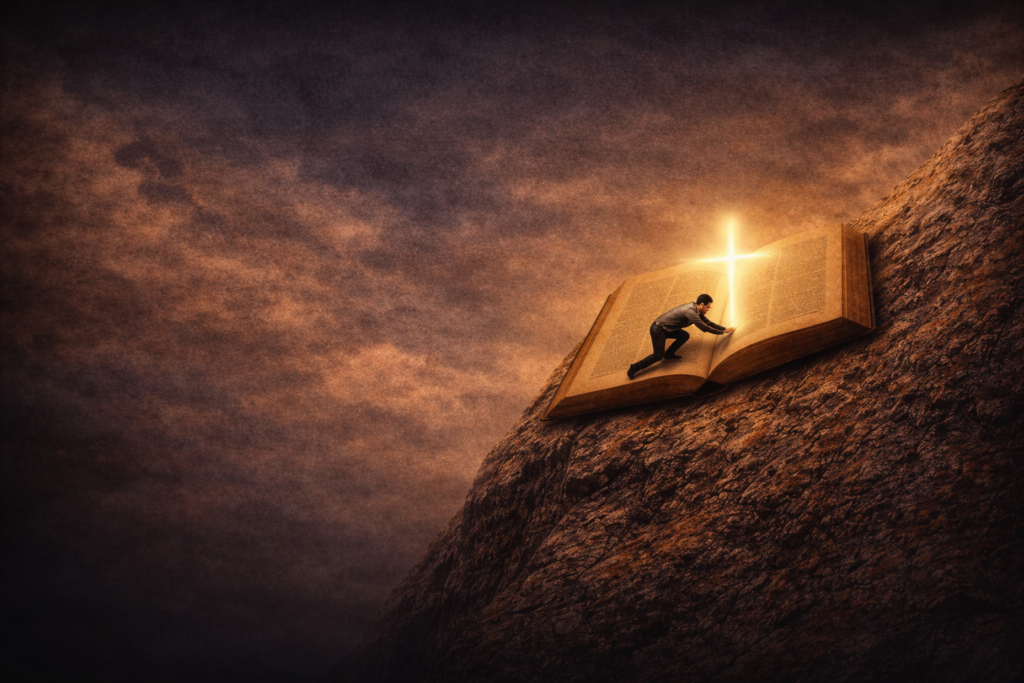
Reasoning the Debate
In the marketplace of ideas, people are confronted with a multitude of opinions on the same subjects. Navigating through them and arriving at sound conclusions has become increasingly difficult. The problem is not always the absence of critical thinking, but rather the misuse of knowledge, reasoning, and debate. Many strive either to elevate their own opinion to the level of absolute truth or to relativise truth altogether so that every opinion may be considered valid. Yet both approaches are futile, for they contradict not only each other but often themselves.
As a result, debate easily degenerates into mockery and reasoning into little more than speaking louder than one’s opponent. Instead of engaging with ideas, people frequently attack the belief system—and sometimes even the person—behind them. Claims are made confidently, yet rarely accompanied by logical explanation or supported by evidence. What should be a pursuit of truth becomes a contest of voices instead.
These shortfalls are not confined to one side of the discussion. They appear both among atheists and theists alike. Whether one identifies as a Christian or simply as a believer in God, arguments are often dismissed by counterclaims rather than examined through evidence and logical criticism. Too often, ideas are rejected without being carefully considered.
From my encounters across the Internet, I have noticed that atheism itself is not uniform. Broadly speaking, there seem to be three types of atheists: those who simply do not believe that God exists, those who actively reject God, and those who do not want God to be true. Interestingly, Psalm 1:1 reflects a similar progression of attitudes. First, there is the counsel of the ungodly — voices that readily offer advice, yet are not grounded in an absolute standard of truth. Second, there is standing in the way of sinners, where commitment is given to live according to such counsel. Finally, there is sitting with the scorners, where comfort in that position has settled in, and the person becomes fully shaped by it.
The progression is subtle but powerful. What may begin as a simple opinion can gradually become a settled worldview. The Bible repeatedly warns about this principle. The book of Proverbs, for example, speaks directly to these dispositions of the human heart, offering wisdom that challenges both the mind and the conscience to discern between what is false and what is true.
Everyone and Me
There is, indeed, nothing new under the sun. Though this statement is well known and often quoted in sermons or Bible studies, it took me longer than I expected to truly grasp its meaning.
Recently I heard someone say on the Internet, “Everyone believes they are right.” That remark made me pause and reflect, because it is fundamentally true. It applies equally to the atheist and to the theist. Yet believing itself can take two very different forms: it may be blind, or it may rest upon evidence. The issue, therefore, is not believing in itself, but the foundation upon which that belief stands.
Once a thinker recognises this principle, he approaches conversations differently. He understands that truth has already been debated, argued, and defended across centuries. This realisation humbles the mind. It reminds us that convincing someone is not always within our power. The sincere seeker of Truth does not attempt to force truth to confirm his own conclusions, but instead allows himself to be confronted and convicted by it.
Here, both the believer and the unbeliever may either succeed or fail. In different ways, we are all ignorant and biased at the same time. Our knowledge is limited; therefore, our perspectives are inevitably partial.
A Christian may deceive himself into thinking he already knows enough about God. Feeling satisfied with his level of understanding, he may begin to rely on his own judgement while venturing into matters he no longer carefully examines. On the other hand, an atheist may simply dismiss the possibility of God altogether, constructing a self-dependent understanding of truth. Such a view may appear stable, but it reaches only as far as the horizon that human reason alone can see.
Yet the remedy remains the same for both. The Gospel is not merely a message about salvation; it is the revelation of the incarnate Truth — the One who laid His life upon the cross. For the believer, the Gospel is a continual reminder that dependence on God is not a burden imposed upon us, but a relationship we willingly embrace. For the unbeliever, the message stands clearly: self-determination may carry us through the days of this life, but it cannot provide meaning beyond it.
I may be right in the wrong, but not wrongly right. The deeper question, therefore, is not simply “Am I right?” but rather: Am I in the truth, and is the truth in me?
Speaking with Power, Proclaiming with Weakness
I would now like to turn our attention to the written truth — the Word of God — and observe a figure from the first-century church. He is a fascinating character who initially inspired me to work harder in knowing the Scriptures. Yet reflecting more deeply on his story challenged me even further. It revealed to me that eloquence, impressive as it may appear, can still fall short when it is not rooted in the fullness of truth.
Apollos was a Jew born in Alexandria, a city founded by Alexander the Great in 331 BC. Alexandria became one of the great intellectual centres of the ancient world, known especially for its famous library and its culture of scholarship and learning. In the early third century BC, the library formed part of the Mouseion — the Temple of the Muses — which aimed to gather the knowledge of the world. During its intellectual and epistemological prominence, an academic program of translation was initiated. Hebrew scholars translated the Scriptures from Hebrew into Greek, known as the Septuagint, so that they could be preserved and studied within this vast collection of ancient texts.
Against this background, we meet Apollos in the book of Acts.
24 And a certain Jew named Apollos, born at Alexandria, an eloquent man, and mighty in the scriptures, came to Ephesus.
25 This man was instructed in the way of the Lord; and being fervent in the spirit, he spake and taught diligently the things of the Lord, knowing only the baptism of John.
26 And he began to speak boldly in the synagogue: whom when Aquila and Priscilla had heard, they took him unto them, and expounded unto him the way of God more perfectly.
27 And when he was disposed to pass into Achaia, the brethren wrote, exhorting the disciples to receive him: who, when he was come, helped them much which had believed through grace:
28 For he mightily convinced the Jews, and that publickly, shewing by the scriptures that Jesus was Christ.
In Acts 18, we read that Apollos was “an eloquent man, and mighty in the Scriptures.” He arrived in Ephesus, teaching diligently the things concerning the Lord. His passion and sincerity are evident, yet the text also reveals an important limitation: he knew only the baptism of John.
Among those who heard him speak were Aquila and Priscilla. Recognising both his zeal and his incomplete understanding, they took him aside and expounded more perfectly the way of God. This moment is striking. An eloquent speaker, likely well educated and confident in the Scriptures, was still willing to be taught.
The emphasis of the passage is not on Apollos’ deficiency but on his teachable spirit. Knowledge alone had already made him a powerful speaker, yet the fuller understanding of the Gospel transformed the effectiveness of his witness. After receiving this instruction, Apollos did not merely gain additional information; he was strengthened and rooted in the truth. The brethren then encouraged him to continue his ministry, and he went on to help those who believed grow, and he publicly demonstrated from the Scriptures that Jesus is the Christ.
Knowing and Believing
The Bible teaches that knowing is not enough, because knowing is not believing. I gather that there are many people who are deceived by the thinking that knowing is believing. Though faith works hand in hand with knowledge, trusting is more than knowing. It requires stepping beyond information and allowing that knowledge to shape the heart and the life. At that point, knowledge is no longer merely understood, but lived. We surrender our understanding of God to what God Himself has revealed.
God is not a written concept, nor merely an old book preserved from the past. Not even a story carried through ancient scrolls and mighty libraries. God is the author of that book.
This is what I found particularly interesting in the case of Apollos. He knew about the baptism of John. When John the Baptist was baptising the people, he was proclaiming Christ who was to come. From what he had learned and heard, Apollos may have been justified in the limits of his understanding at that moment. Yet the fullness of the Gospel — the reality that the promised Messiah had come and accomplished redemption — was something he had not yet fully grasped.
Apollos, however, had something remarkable: a teachable mind and heart. After Aquila and Priscilla explained the way of God more perfectly, he did not resist correction. Instead, he embraced the fuller truth. Verse 28 confirms this transformation. He was now proclaiming Christ and demonstrating from the Scriptures that Jesus is the Messiah, following the same pattern as Paul and the other apostles.
Great minds are those that recognise there is still more to learn. There are moments when ignorance may be understandable. Yet we do not live in the days of the first-century church. The Scriptures have been preserved, translated, studied, and preached for centuries. Today, there is an abundance of resources available to anyone who truly wishes to understand.
More than that, the believer possesses the indwelling of the Holy Spirit, who enables spiritual discernment of what the Scriptures teach. For this reason, I am inclined to say that we are without excuse.
The Bible teaches that knowing is not enough, because knowing is not believing. I gather that there are many people who are deceived by the thinking that knowing is believing. Though faith works hand in hand with knowledge, trusting is more than knowing. I am already stepping on the side of applying that knowledge, where it is supposed to be applied, and surrender my understanding about God, to what God revealed.God is not a written concept, an olde book. Not even a story from ancient scrolls preserved in mighty libraries. God is the author of that book.
This is what I found interesting in Apollos. He knew about John’s baptism. When John the Baptist was baptising the people, he was proclaiming Christ. Though we can argue that Apollos was justified in how much he knew, as he may have based it on what was written and heard from reliable sources to that point. Hence, the gospel was a later development, and in the hands of the chosen apostles. John the Baptist was not present among them. Therefore, Apollos was falling short of the great good news that, in Christ, promised and prophesied, salvation was now the reality lived by many. Apollos had a teachable mind and heart. Verse 28 confirms this, as now he was preaching Christ, showing from the Scriptures. Following the same pattern as Paul and the other apostles.
Great minds are those which acknowledge there is more to be learned and taught. There are times when our ignorance is justified. However, we do not live in the times of the first-century church anymore. The Bible has been confirmed, debated, commented on and preached that there is a plethora of sources today. From which people can learn. What is more, above it all, the Bible has been translated and put in clear language, so that the reader or the thinker can see it and understand. Furthermore, a believer has the indwelling of the Holy Ghost; therefore, able to spiritually discern what the Bible teaches. I am inclined to state that we are without excuse.
Witnessing and proclaiming the truth can only be attained if we are in the Truth. The Truth in Christianity, as the Bible proclaims, is not a concept but a person — the One who laid His life on the cross, rose from the dead on the third day, and even now stands at the right hand of the Father in glory, grace and honour.
If ye then be risen with Christ, seek those things which are above, where Christ sitteth on the right hand of God. Colossians 3:1
A fundamental question, therefore, is one each person must ask: If I have believed in the Lord Jesus Christ, have I been raised with Him?
Witnessing and Indignation
So often, when we are out in the world proclaiming Christ, we are confronted with rejection and counterarguments. In those moments, we may feel the weight of the opposition. Yet one thing we must not forget is this: if we have been raised with Christ, we already stand in the Truth. Therefore, our righteous indignation should move its weight away from the tone of our voice and toward the strength of the argument itself. The truth must be spoken in love and sincerity, sharing both the beauty of heaven and the sobering reality of hell – loneliness and darkness.
I have seen many people publicly testify of Christ and preach the good news. Yet when they are questioned about the hope that is within them, and perhaps mocked or rejected, the witness sometimes changes into something unrecognisable. What began as testimony becomes a struggle to prove why I am right and you are wrong. When we truly stand in the Truth, such a defence becomes unnecessary. Debates built on personal vindication rarely accomplish anything. Worse still, observers may conclude that Christianity is no different from any other ideology competing for dominance.
Christ Himself never argued to justify why He was right. He demonstrated the truth through His life — through miracles, integrity, humility and suffering. Ultimately, He sealed that testimony by laying down His life. The first generation of believers followed the same path. They did not suffer and die because they were fanatics, but because the Truth lived fully within them. Whoever trusts in the Lord Jesus Christ enters a reality in which death itself is the final and loudest witnessing. They may lose this earthly life, yet they never die.
We must grasp this principle deeply. When the weight rests on the truth itself, our words and actions speak with greater power. The Gospel becomes so substantial that those who reject it do so knowingly. In such moments, the Truth is proclaimed and honoured, even when it is resisted. A gentle voice and a strong argument will not always soften hardened hearts. We may suffer for the truth; some may even face death. Yet martyrdom is a voice that never fades. Christianity itself was founded upon it. Christ did not command His followers to take up arms, but to take up the cross and bear the yoke.
We are sent into the world as sheep among wolves. Therefore, we should not expect anything less than rejection, mockery, or hostility. Sadly, there are also times when Christians themselves stumble while holding the Truth in their hands. They slip on the right side, not realising that the ground beneath them is already the Truth.
For this reason, we must restrain our natural reactions and instead present the transforming work Christ has done within us. Knowledge alone can become cold, angry, and arrogant. Christ, however, is the opposite. He is love, joy, peace, longsuffering, gentleness, goodness, faith, meekness and temperance. To witness Christ truly is to allow His character to be seen through our words and our lives.
The story of Apollos reveals an important distinction. It is possible to know the Scriptures and yet still lack the fullness of who they reveal. Knowledge of the Bible alone does not automatically mean that a person truly knows Christ. The Scriptures were never given merely to be studied as an intellectual or memory exercise, but to lead the reader to the Saviour they testify about. Apollos knew the Scriptures and spoke with eloquence, yet he still needed to understand more perfectly the way of God. Only when Christ Himself stands at the centre does knowledge become complete. True maturity in the knowledge of Scripture leads to a Christ-centred eloquence, for in Him “are hid all the treasures of wisdom and knowledge.” (Colossians 2:3)
Discover more from AvA blog
Subscribe to get the latest posts sent to your email.
